

Most DeFi losses do not begin with a dramatic hack. They begin with a transaction that looks ordinary: a token approval, a swap, a bridge transfer, or a signature request that the user never fully understood. The counterintuitive lesson is that a wallet can protect a user without ever “stopping” the blockchain. Its most valuable work may happen before a transaction is submitted, by translating opaque contract behavior into consequences a person can inspect.
That shift connects three developments that are often discussed separately: dApp integration, MEV protection, and portfolio tracking. Together, they describe a move from passive custody toward transaction context. Yet the change is not automatically safer. Simulation can be incomplete, MEV controls can introduce trade-offs, and portfolio dashboards can create a false sense of precision. The useful question is not whether a wallet has more features, but whether those features improve the user’s decision at the moment risk appears.
Myth: dApp integration means giving a wallet unlimited permission
Early Web3 wallets were often treated as narrow bridges between a browser and a blockchain. A decentralized application, or dApp, generated a transaction; the wallet displayed a request; the user approved it. This model made the wallet feel neutral, but neutrality was partly an illusion. If the wallet showed only a contract address, a gas estimate, and a large confirmation button, it was still shaping the decision—by withholding context.
Modern dApp integration is more useful when it explains the interaction rather than merely forwarding it. A wallet can identify the network, the target contract, the assets involved, the requested token allowance, and the likely effect on the account. That matters because a token approval and a token transfer may look similar to an inexperienced user while carrying very different consequences. An approval can authorize a contract to move tokens later, depending on the allowance and the contract’s behavior. The immediate transaction may not move funds at all, but it can expand future exposure.
Transaction simulation adds another layer. In broad terms, simulation runs the proposed call against an estimated blockchain state and reports expected changes: assets received or spent, balances altered, approvals granted, or a transaction likely to fail. This is a form of pre-trade analysis. It does not prove that the transaction is safe; it gives the user a model of what the transaction is attempting to do.
That distinction is crucial. Simulation is not an oracle, an audit, or a guarantee. It can be affected by changing prices, pending transactions, block ordering, oracle updates, contract branches, and actions that occur after the simulation. A malicious contract may also behave differently under conditions that the simulator does not reproduce. The practical conclusion is not to distrust simulation, but to use it as a warning system: unexpected recipients, unfamiliar approvals, or a balance change that does not match the user’s intention should trigger a pause.
For US users moving among Ethereum-compatible networks, dApp integration also reduces a quieter source of error: chain confusion. A transaction can be valid on one network and irrelevant or dangerous on another. Better wallet context can make the network, asset, and contract relationship visible before signing. It cannot eliminate mistaken assumptions about bridges or wrapped assets, but it can narrow the gap between what the interface promises and what the blockchain records.
Myth: MEV protection makes every swap private and fair
Maximal extractable value, commonly called MEV, is the value that block builders, validators, searchers, or other participants may capture by influencing transaction ordering or including related transactions. A familiar example is a sandwich attack: a searcher places one transaction before a user’s swap and another after it, attempting to profit from the price movement created by the user’s order.
MEV is not synonymous with theft. Some forms of arbitrage help align prices across markets, and liquidation activity can support lending protocols. The problem is distribution and exposure. A user may receive a worse execution price because another participant can observe the pending transaction, predict its effect, and react faster. On a liquid US dollar market, the loss may be small in absolute terms; on a thin pool or volatile token, the same mechanism can become material.
Wallet-level MEV protection usually works by changing how a transaction reaches the block-production pipeline. Instead of broadcasting it openly to a public mempool, a wallet or connected service may route it through a private submission path or specialized relay. The goal is to reduce the period during which other participants can see and react to the order before inclusion.
But “protected” does not mean “immune.” Private routing may depend on infrastructure, network support, relay availability, and the behavior of the eventual block producer. It may alter inclusion speed or reduce visibility for legitimate arbitrage. A private path can also create a different trust question: the user may be reducing exposure to public observers while relying more heavily on an intermediary to transmit the transaction. That is a trade-off, not a free upgrade.
There is a second misconception worth correcting: MEV protection cannot repair poor trade parameters. If slippage tolerance is set too high, a private transaction can still execute at an unattractive price. If the liquidity pool is shallow, the user’s own order can move the market. If the token has transfer restrictions or unusual mechanics, privacy does not make the asset conventional. Good protection therefore combines routing choices with transaction simulation, sensible slippage limits, and attention to liquidity.
The decision-useful mental model is simple: treat MEV protection as reducing one category of information leakage, not as an all-purpose safety shield. Before a swap, ask three separate questions. Is the contract interaction what I intend? Is the execution price bounded by a reasonable slippage limit? Is the transaction being exposed in a way that creates avoidable ordering risk? Each question addresses a different failure mode.
Myth: portfolio tracking is just a prettier balance screen
Portfolio tracking developed from a basic need: users wanted to see holdings across wallets and networks without opening every application separately. As DeFi grew, the balance became harder to define. A user might hold a liquid token, deposit another asset into a lending market, provide liquidity in a pool, stake a derivative, or leave funds in a bridge contract. The account address alone no longer described the economic position.
A useful portfolio tracker must therefore do more than add token quantities. It needs to distinguish assets from claims on assets, estimate values across networks, recognize protocol positions, and account for changes in exchange rates. Even then, the displayed number is an estimate. Pricing may rely on available market data; illiquid tokens can be difficult to value; liquidity-provider positions may change composition; and yield can reflect incentives that are temporary rather than durable income.
This is where portfolio tracking intersects with security. An unfamiliar asset appearing in a wallet may be harmless spam, airdrop bait, or a token with transfer restrictions. A dashboard that highlights unexpected approvals, newly connected contracts, or changes in exposure can help users notice risk earlier. Conversely, a clean-looking total can hide the most important fact: the user may have concentrated exposure to one protocol, one bridge, one stablecoin design, or one chain.
The non-obvious point is that portfolio visibility can improve behavior only if it separates certainty from estimation. A wallet should ideally help the user distinguish confirmed balances, protocol-reported positions, and market-value approximations. If all three appear as equally authoritative numbers, the interface may encourage overconfidence. This is especially relevant during volatile US market hours, when prices can move faster than a dashboard refreshes.
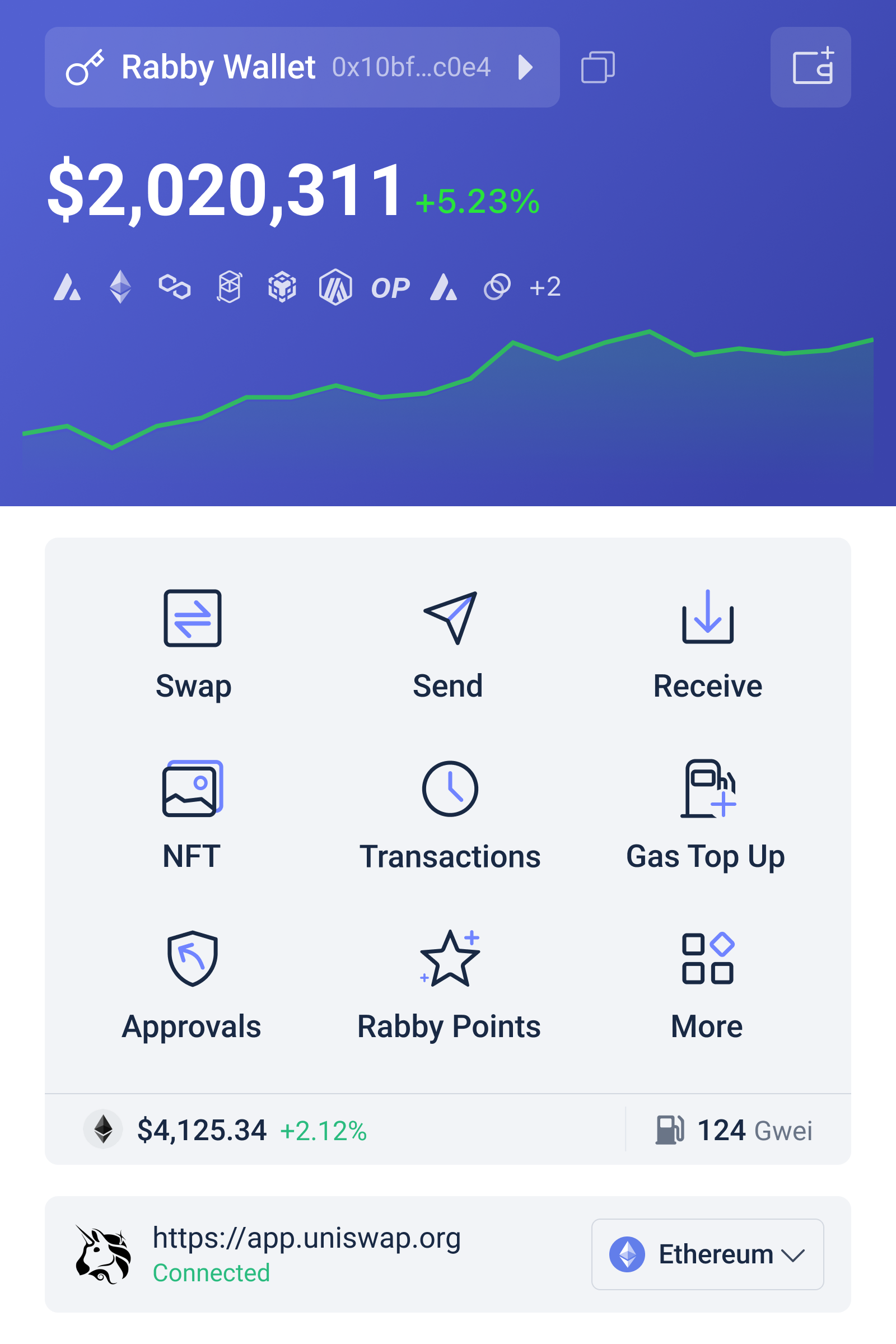
For users comparing advanced wallets, the practical test is whether the interface connects portfolio data to action. A tracker is more valuable when it can lead the user from “my exposure changed” to “which contract caused it?” and then to “what would a proposed approval or withdrawal do?” A wallet such as rabby is relevant to that workflow because the value of simulation and security information is greatest when it is placed beside the dApp interaction, rather than buried in a separate research process.
How the three systems reinforce one another
Consider a user supplying a stablecoin to a lending dApp. dApp integration identifies the contract and the requested approval. Simulation previews the expected asset movement and the resulting lending position. Portfolio tracking records the position and its estimated value. If the user later withdraws, the same chain of context can expose an unexpected recipient, a changed approval, or a balance effect that does not match the plan.
MEV protection addresses a different moment: the transaction’s route from wallet to block. Simulation asks, “What is this call likely to do?” Portfolio tracking asks, “How does this change my overall exposure?” MEV protection asks, “Who may observe or reorder this transaction before it is included?” Treating these as interchangeable features is a category error. They operate at different layers and must be evaluated separately.
The strongest workflow is therefore not maximum automation. It is staged confirmation. First, identify the application and network. Second, inspect the simulated balance and approval changes. Third, check execution limits such as slippage and gas. Fourth, consider whether public broadcast creates unnecessary ordering exposure. Finally, review the portfolio after settlement rather than assuming the transaction succeeded exactly as expected.
That process has friction, and friction is not always bad. DeFi products compete for speed and convenience, while security often requires attention. A wallet that presents too many warnings can produce alert fatigue; users may approve everything simply to make the prompts disappear. The design challenge is prioritization: warnings should distinguish an unlimited approval from a routine interaction, a new contract from a familiar one, and a likely balance loss from a minor metadata issue.
What to watch as wallets mature
The next phase of wallet design will likely be judged by how well it handles uncertainty. Better interfaces may combine simulation, approval management, portfolio exposure, and transaction routing into one decision surface. If those systems become more interoperable, users could assess not only an individual transaction but also its effect on concentration, liquidity, and counterparty dependence.
That outcome is conditional, not inevitable. More integrated wallets may also become more complex, depend on additional data providers, or centralize sensitive transaction context. Users should watch whether a feature explains its assumptions, identifies stale or incomplete data, and offers a fallback when simulation or private routing is unavailable. Transparency about failure is a security feature in its own right.
The durable lesson is that a wallet cannot outsource judgment. It can make contract behavior more legible, reduce some forms of transaction exposure, and reveal portfolio changes that would otherwise remain scattered across networks. Those capabilities are meaningful precisely because they address different risks. They become dangerous when marketing language compresses them into a promise of complete protection.
Frequently asked questions
Does transaction simulation guarantee that a dApp interaction is safe?
No. Simulation estimates the result under a particular blockchain state and set of assumptions. It can identify many unexpected balance changes and approval requests, but it cannot guarantee contract honesty, future behavior, or successful execution under changing conditions. Use it alongside contract familiarity, reasonable permissions, and transaction limits.
Should every DeFi user enable MEV protection?
It can be useful for swaps and other transactions where public visibility may create ordering risk, but it is not universally superior. Availability, speed, fees, relay dependence, and transaction type matter. MEV protection also does not solve excessive slippage, low liquidity, or a malicious contract.
Why can a portfolio tracker show a misleading total?
Because the total may combine live balances, protocol positions, estimated prices, and illiquid assets. Some positions are claims whose value depends on a smart contract or market exit. Treat the displayed total as an analytical estimate, then inspect the underlying assets, protocols, and concentration before making a decision.